Natrapharm Home | Contact Us | Sitemap    
   Patriot Pharmaceutical Corp.   
Products

Natrapharm, Inc.

Patriot Pharmaceutical Corp.
 
Home » Products » Vasalat


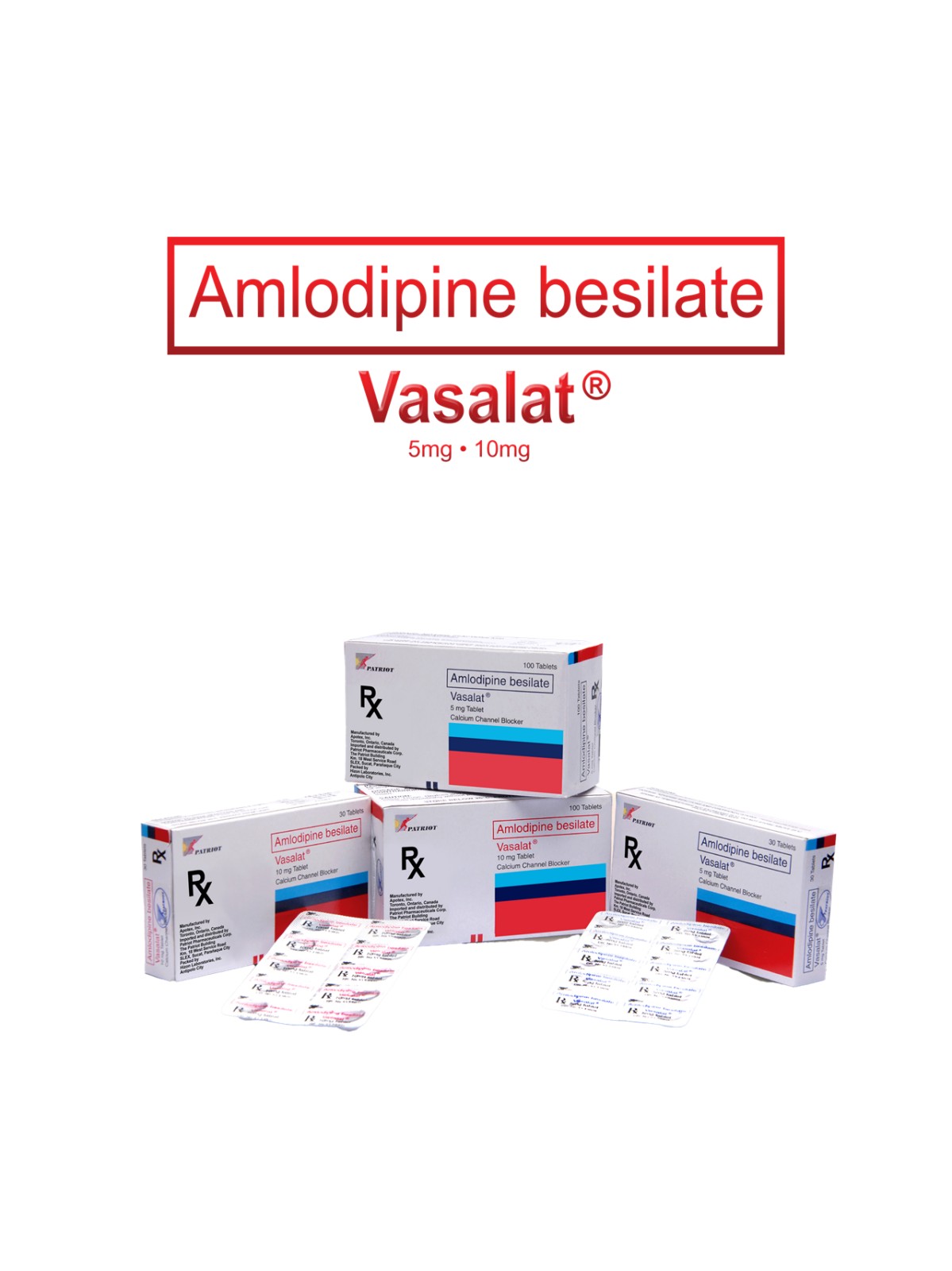
Amlodipine besylate

vasalat®


FORMULATION:
Each 5mg tablet contains amlodipine besylate equivalent to 5mg amlodipine
Each 10mg tablet contains amlodipine besylate equivalent to 10mg amlodipine

INDICATIONS:
In the management of hypertension and prophylaxis of angina

MECHANISM OF ACTION:
Amlodipine is a dihydropyridine calcium-channel blocker, which is also known as calcium antagonists, calcium-entry blockers, and slow-channel blockers. It inhibits the cellular movements of calcium ions across cell membranes. It acts primarily via inhibition of calcium into vascular smooth muscle and, to lesser extent cardiac muscle. As a result, amlodipine produces peripheral arterial vasolidation and lowers blood pressure, with relatively little negative inotropic effect. Amlodipine interacts with calcium ions channel by an ongoing association/dissociation with the receptor binding site, producing a gradual onset of action.

Amlodipine has a greater selectivity for vascular smooth muscle than for myocardium and therefore their main effect is vasodilation. It has little or no action at the sinoatrial (SA) or atrioventricular (AV) nodes and negative inotropic activity is rarely seen at therapeutic doses. It is used for antihypertensive and antianginal properties.

Amlodipine reduces the work of the heart by dilating peripheral arteries and also act on the coronary circulation preventing spasm.

PHARMCOKINETICS:
Amlodipine is well absorbed following oral administration with peak blood concentrations occurring during 6 to 12 hours. The bioavailability is about 64 to 90%. Absorption is not affected by administration with food. Amlodipine is widely distributed, with a volume of distribution of 16 to 12 L/kg. Amlodipine is reported to be about 97.5% bound to plasma proteins. It has a prolonged terminal elimination half-life of 35 to 50 hours and steady-state plasma concentrations are not achieved until after 7 to 8 days of administration. Amlodipine is extensively metabolized in the liver and oxidation to the pyridine analogue represent a major step. Metabolites are mostly excreted 0.4L/hr/kg/. Patients with hepatic dysfunction may have a delayed clearance of drug. Doses should be reduced in these patients to account for this delay. No dosage adjustment is necessary for patients with renal dysfunction. Amlodipine is not removed by dialysis.

PHARMACODYNAMICS:
Following administration of therapeutic doses to patients with hypertension, amlodipine produces vasodilation resulting in a reduction of supine and standing blood pressures. These decreases in blood pressures are accompanied by a significant change in the heart rate of plasma catecholamine levels with chronic dosing. Although the acute intravenous administration of amlodipine decreases arterial blood pressure and increases heart rate in hemodynamic studies of patients with chronic stable angina, chronic administration of oral amlodipine in clinical trials did not lead to clinically significant changes in heart rate or blood pressures in normotensive patients with angina.

With chronic once daily oral administration of amlodipine, antihypertensive effectiveness is maintained for at least 24 hours. Plasma concentrations correlate with effect in both young and elderly patients. The magnitude or reduction on blood pressure with amlodipine is also correlated with the heights of pretreatment elevation, this individuals with moderate hypertension (diastolic pressure 101-114mmHg) had about a 50% greater responses than patients with mild hypertension (diastolic pressure 90-104mmHg). Normotensive subjects experienced no clinically significant change in blood pressure (+1/-2 mmHg)

In hypertensive patients with normal renal function, therapeutic doses of amlodipine resulted in a decrease in renal vascular resistance and an increase in glomerular filtration rate and effective renal plasma flow without change in filtration fraction or proteinuria.

As with other calcium channel blockers, hemodynamic measurements of cardiac function at rest and during exercise (or pacing) in patients with normal ventricular function treated wit amlodipine have generally demonstrated a small increase in cardial index without significant influence on dP/dt or on left ventricular and diastolic pressure or volume. In hemodynamic studies, amlodipine has not been associated with a negative inotropic effect when administered in the therapeutic dose range to intact animals and man, even when co-administered with beta-blockers to man. Similar findings, however, have been observed in normals or well-compensated patients with failure with agents possessing significant negative inotropic effects.

ELECTROPHYSIOLOGIC EFFECTS:
Amlodipine does not change sinoatrial nodal function or atrioventricular conduction in intact animals or man. In patients with chronic stable angina, intravenous administration of 10mg did not significantly alter A-H and H-V conduction and sinus node recovery time after pacing. Similar results were obtained in patients receiving amlodipine and concomitant beta blockers. In clinical studies in which amlodipine was administered in combination with beta-blockers to patients with either hypertension or angina, no adverse effects on electrocardiographic parameters were observed. In clinical trials with angina patients alone, amlodipine therapy did not alter electrocardiographic intervals or produce higher degrees of AV blocks.

ADVERSE EFFECTS:
Calcium-channel blockers are normally avoided in patients with heart failure but amlodipine has not been found to have any adverse effects on morbidity or mortality in patients with sever heart failure receiving drug. Therefore it may be suitable treatment for angina pectoris or hypertension in some patients.

Amlodipine is well tolerated by most patients. In clinical trials in adults, the rate f discontinuation (1.5%) was no different that that of placebo. The most commonly reported adverse effects were headache, edema, dizziness, flushing and palpitations. Other adverse effects reported in 1 to 4% of patients receiving either amlodipine or placebo include: fatigue, nausea, abdominal pain, somnolence. Muscle cramps, pruritus and rash. The incidence of hypotension arrhythmias and peripheral ischemia with amlodipine use was less than 1%. In post marketing surveillance, gynecomastia and hepatic dysfunction (with jaundice and elevated hepatic transminases) have been reported.

In pediatric reports, amlodipine has been associated with the development of edema, fatigue, flushing, headache, dizziness and nausea.

DRUG INTERACTIONS:
The following drug interactions and/or related problems have been selected on the bases of their potential clinical significance.

NOTE: Combinations containing any of the following medications, depending on the amount present, may also interact with this medication.

Anesthetics, hydrocarbon inhalation: (on current use with amlodipine may produce additive hypotension although calcium channel blocking agents may be useful to prevent supraventricular tachycardias, hypertension, or coronary spasm during surgery, caution is recommended during use.

Anti-inflammatory drugs, nonsteroidal (NSAIDs) especially indomethacin NSAIDs may reduce the antihypertensive effects of amlodipine by inhibiting renal prostaglandin sysnthesis and/or causing sodium and fluid retention.

Beta-adrenergic blocking agents: although reports of adverse effects resulting from concurrent use of amlodipine with the beta-adrenergic blocking agents are lacking, caution is recommended give the similarity of amlodipine to nifedipine; concurrent use of nifedipine with the beta-adrenergic blocking agents, although usually well-tolerated, may produce excessive hypotension and, in rare cases, may increase the possibility of congestive heart failure.

Estrogens: estrogen-induced fluid retention may tend to increase blood pressure the patients should be carefully monitored to confirm that the desired effect is being obtained.

Highly protein-bound medications such as:
Anticoagulants, coumarin- and indandione- derivates,
Andiconvulsants, hydration,
Anti-inflammatory drugs, nonsteroidal
Quinine
Salicylates
Sulfinpyrazone

Cautions is advised when these medications are use concurrently with amlodipine since amlodipine is highly protein bound; changes in serum concentrations of the free, unbound medications may occur.

Hypotension-producing medications: antihypertensive effects may be potentiated when amlodipine is used concurrently with hypotension-producing medications; although some antihypertensive and/or diuretic combinations are used concurrently, dosage adjustments may be necessary

Lithium: concurrent use with amlodipine may result in neurotoxicity in the form of nausea, vomiting, diarrhea, ataxia, tremors and/or tinnitus; caution is recommended

Sympathomimetics: concurrent use may reduce antihypertensive effects of amlodipine; the patients should be carefully monitored to confirm that the desired effect is being obtained.

MEDICAL CONSIDERATION/CONTRAINDICATIONS:
Except under special circumstances, this medication should not be used when the following medical problem exists:

Hypotension (severe): amlodipine may aggravate this condition.

RISK - BENEFIT SHOULD BE CONSIDERED WHEN TEH FOLLOWING MEDICAL PROBLEMS EXIST:
Aortic stenosis: increased risk of heart failure because of fixed impedance to flow across the artic valve.

Congestive heart failure: amlodipine should be used with caution because of the slight risk for negative inotropic effect

Hepatic function impairment- clearance of amlodipine may be reduced since it undergoes extensive hepatic metabolism; elimination half-life may be prolonged to 60 hours.

Sensitivity to amlodipine

PATIENTS MONITORING:
The following may be especially important in patient monitoring (other tests may be warranted in some patients, depending on condition);
  • Blood pressure determinations
  • ECG reading
  • Heart rate determinations
  • Reduced frequency or severity of anginal attacks
Decreased nitrate consumption

Improved exercise tolerance without angina recommended primarily during dosage titration or when dosage is increased from established maintenance dosage level; also recommended when other medications are added that affect cardiac conduction or blood pressure

Blood pressure determinations are recommended at periodic intervals to monitor efficacy and safety of amlodipine therapy; selected patients may be trained to perform blood pressure measurements at home and reports the results at regular physician visits

CARCINOGENICITY:
No evidence of carcinogenicity was revealed in studies with rats and mice given amlodipine at dosages of 0.5, 1.25 and 2.5mg per kg of body weight (mg/kg) per day for 2 years.

MUTAGENICITY:
No evidence of mutagenicity was observed at the gene or chromosome level.

PREGNANCY/REPRODUCTION:
Fertility- No impairment of fertility was observed in rats given amlodipine at doses 8 times the maximum recommended human dose prior to mating

Pregnancy- Studies have not been done in humans.

No evidence of teratogenecity or other embryo/fetal toxicity was observed in rats or rabbits given up to 10mg/kg during periods of major organogenesis. However, the number of intrauterine deaths increased above five-fold and rat litter size was significantly decreased (by 50%)

Amlodipine should be used during pregnancy only if the potential benefit justifies the potential risk of the fetus.

LABOR:
Amlodipine has been shown to prolong the duration of labor in rats

BREAST-FEEDING:
It is not known whether amlodipine is distributed in breast milk thus it is recommended that nursing be discontinued while amlodipine is administered.

PEDIATRICS:
No information is available on the relationship of age to the effects of amlodipine in pediatric patients. Safety and efficacy have not been established.

GERIATRICS:
The half-life of amlodipine may be increased in the elderly. These patients may be more sensitive to the hypotensive effects of amlodipine and may require a lower initial dose.

DENTAL:
Gingival hyperplasia is a rare side effect that has been reported with amlodipine. It has been reported with other calcium channel blocking agents, such as dilitiazem felodipine, verapamil and most commonly, nifedipine. It usually starts as gingivitis or gum inflammation in the first 1 to 9 months of treatment. Resolution of the hyperplasia and improvement of the clinical symptoms usually occur one to four weeks after discontinuation of therapy. A strictly enforced program of professional teeth cleaning combined with plaque control by the patient will minimize growth rate and severity of gingival enlargement. Periodontal surgery may be indicated in some case and should be followed by careful plaque control to inhibit recurrence of gum enlargement.

SURGICAL:
Recent evidence suggests that withdrawal of antihypertensive therapy prior to surgery may be undesirable. However, the anesthesiologist must be aware of such therapy.

WARNINGS:
Increased angina and/or myocardial infarction: Rarely, patients, particularly those with severe obstructive coronary artery disease, have developed documented increased frequency, duration and/or severity of angina or acute myocardial infarction on starting calcium channel blocker therapy or at the time of dosage increase. The mechanism of this effect has been elucidated.

PRECAUTIONS:
Caution should be exercised when administering amlodipine as with other peripheral vasodilator particularly in patients with severe aortic stenosis and to patients with heart failure.

TREATMENT FOR OVERDOSAGE:
Overdosage might be expected to cause excessive peripheral vasodilation with marked hypotension and possibly a reflex tachycardia.

If massive overdose should occur, active cardiac and respiratory monitoring should be instituted. Frequent blood pressure measurements are essential. Should hypotension occur, cardiovascular support including elevation of the extremities and the judicious administration of fluids should be initiated. If hypotension remains unresponsive to these conservative measures, administration of vasopressors (such as phenylephirine) should be considered with attention to circulating volume and urine output. Intravenous calcium gluconate may help to reverse the effects of calcium entry blockade. As amlodipine is highly protein bound, hemodialysis is not likely to be of benefit

DOSING INFORMATION:
Concurrent administration of sublingual nitroglycerin, long-acting nitrates, beta-blockers or other antianginal agents with amlodipine may produce additive antihypertensive and antianginal effects. Sublingual nitroglycerin may be used as needed to abort acute angina attacks during amlodipine therapy. Nitrate medication may be used during amlodipine therapy for angina prophylaxis. Amlodipine will not protect against the consequences of abrupt beta-blocker withdrawal; gradual beta-blocker dose reduction is recommended.

Although no "rebound effect: has been reported upon discontinuation of amlodipine, a gradual decrease of dosage with physician supervision is recommended.

DOSAGE AND ADMINISTRATION:
Usual adult dose: 5 to 10mg once a day

NOTE:
An initial antihypertensive dose of 2.5mg is recommended for small, fragile or elderly patients, patients with hepatic function impairment, or when adding amlodipine to other antihypertensive therapy. Because of amlodipine's prolonged elimination half-life, dosage increases should be accomplished slowly at five- to seven days' intervals. Rapid titration without complete assessment of the patient's response at each dosage level may result in hypotension. An initial antianginal dose of 5mg is recommended for the elderly and for patients with hepatic function impairment.

Children (6-17 years old): 2.5mg to 5.0mg once daily.
Similar doses are given in the treatment of stable angina and Prinzmental's angina

CAUTION:
Foods, Drugs, Devices and Cosmetics Acts prohibits dispensing without prescription.

AVAILABILITY:
5mg tablet- Blister pack of 10's; Box of 30 and 100 tablets
10mg tablet- Blister pack of 10's; Box of 30 and 100 tablets

STORE AT 25°C. PROTECT FROM LIGHT
The Company

Corporate Services

Careers at Natrapharm
Home | The Company | Corporate Values | Corporate Services | Products | About the Philippines | Careers | Contact Us | Sitemap
©2008 . Powered by ASPAC/LAW