Products
|
|
| |
Home » Products » Remeron
MIRTAZAPINE
remeron®
Antidepressants increase the risk of suicidal thinking and behavior (suicidality) in children and adolescents with major depressive disorder (MDD) and other "psychiatric disorders" and those considering use of these agents "must balance risk with the clinical need"
1. Name of the medicinal product
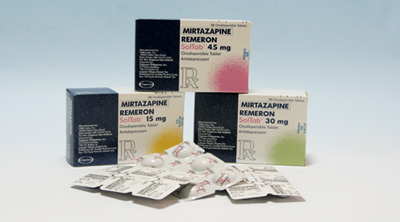
Remeron SolTab 15mg orodispersible tablets
Remeron SolTab 30mg orodispersible tablets
Remeron SolTab 45mg orodispersible tablets
2. Qualitative and quantitative composition
Each orodispersible tablet contains 15, 30 or 45mg of mirtazapine. For excipients, see section 6.1.
3. Pharmaceutical form
Orodispersible tablet. Round, white, standard bevelled-edge tablets marked with a code on one side(TZ/1 for 15mg tablets, TZ/2 for 30mg tablets and TZ/4 for 45mg tablets).
4. Clinical particulars
4.1 Therapeutic indications
Episode of major depression.
4.2 Posology and method of administration
-In order to prevent crushing the tablet, do not push against the tablet pocket.
-Each strip contains six tablet pockets, which are separated by perforations. Tear off one tablet pocket along the dotted lines.
- Carefully peel off the lidding foil, starting in the corner indicated by the arrow.
- The tablets should be taken orally. The tablet will rapidly disintegrate and can be swallowed without water.
Adults:
The effective daily dose is usually between 15 and 45mg; the starting dose is 15 or 30mg (the higher dose should be taken at night)
Elderly:
The recommended dose is the same as that for adults. In elderly patients, an increase in dosing should be done under close supervision to elicit a satisfactory and safe response.
Children and adolescents under the age of 18 years:
In placebo-controlled trials, safety and efficacy of Remeron in the treatment of children and adolescents under the age of 18 years with major depressive disorder have not been established. Safety and efficacy in this population cannot be extrapolated from adult data. Therefore, Remeron should not be used in children and adolescents under the of 18 years. The clearance of mirtazapine may be decreased in patients with renal or hepatic insufficiency. This should be taken into account when prescribing Remeron to this category of patients. Mirtazapine has a half-life of 20-40 hours and therefore Remeron is suitable for once-a-day administration. It should be taken preferably as a single nighttime dose before going to bed. Remeron may also be given in sub-doses equally divided over the day (once in the morning and once at night-time). Treatment should preferably be continued until the patient has been completely symptom-free for 4-6 months. After this, treatment can be gradually discontinued. Mirtazapine begins to exert its effect in general after 1-2 weeks of treatment. Treatment with an adequate dose should result in a positive response within 2-4 weeks. With an insufficient response, the dose can be increased up to the maximum dose. If there is no response within a further 2-4 weeks, then treatment should be stopped.
4.3 Contraindications
Hypersensitivity to mirtazapine or to any of the excipients.
4.4 Special warnings and precautions for use
Bone marrow depression, usually presenting as granulocytopenia or agranulocytosis, has been reported during treatment with Remeron. This mostly appears after 4-6 weeks of treatment and is in general reversible after termination of treatment. However in very rare cases agranulocytosis can be fatal. Reversible agranulocytosis has been reported as a rare occurrence in clinical studies with Remeron. In the postmarketing period with Remeron very rare cases of agranulocytosis have been reported, mostly reversible, but in some cases fatal. All fatal cases concerned patients with an age above 65. The physician should be alert for symptoms like fever, sore throat, stomatitis or other signs of infection; when such symptoms occur, treatment should be stopped and blood counts taken.
Careful dosing as well as regular and close monitoring is necessary in patients with
-epilepsy and organic brain syndrome; from clinical experience it appears that insults occur rarely in patients treated with Remeron.
- hepatic or renal insufficiency
- cardiac diseases like conduction disturbances, angina pectoris and recent myocardial infarct, where normal precautions should be taken and concomitant medicines carefully administered
- low blood pressure.
Like with other antidepressants care should be taken in patients with:
- Micturition disturbances like prostate hypertrophy
- Acute narrow-angle glaucoma and increased intra-ocular pressure
- Diabetes mellitus
Treatment should be discontinued if jaundice occurs.
Moreover, like with other antidepressants, the following should be taken into account:
- Worsening of psychotic symptoms can occur when antidepressants are administered to patients with schizophrenia or other psychotic disturbances; paranoid thoughts can be intensified
- When the depressive phase of manic-depressive psychosis is being treated. It can transform into the manic phase.
- With regard to the chance of suicide, in particular at the beginning of treatment, only a limited number of Remeron SolTab tablets should be given to the patients
- Although Remeron is not addictive, post-marketing experience shows that abrupt termination of treatment after long-term administration may sometimes result in withdrawal symptoms. The majority of withdrawal reactions are mild and self-limiting. Among the various reported withdrawal symptoms, dizziness, agitation, anxiety, headache and nausea are the most frequently reported. Even though they have been reported as withdrawal symptoms, it should be realized that these symptoms might be related to underlying disease. As advised in section 4.2, it is recommended to discontinue treatment with mirtazapine gradually.
- Elderly patients are often more sensitive, especially with regard to the undesirable effects of antidepressants. During clinical research with Remeron, undesirable effects have not been reported more often in elderly patients than in other age groups.
- From post-marketing experience it appears that serotonin syndrome occurs very rarely in patients treated with Remeron alone.
- Interactions with other seratonergic drugs (see section 4.5)
Remeron SolTab contains sugar spheres, containing sucrose. Patients with rare hereditary problems of fructose intolerance, glucose-galactose malabsorption or sucrose-isomaltase insufficiency should not take this medicine.
Remeron SolTab contains aspartame a source of phenylalanine. Each tablet with 15mg, 30mg and 45mg mirtazapine corresponds to 2.6 mg, 5.2mg and 7.8mg phenylalanine, respectively. May be harmful for patients with phenylketonuria.
Use in children and adolescents under 18 years of age
Remeron should not be used in the treatment of children and adolescents under the age of 18 years. Suicide-related behaviors and hostility were more frequently observed in clinical need, a decision to treat is nevertheless taken; the patient should be carefully monitored for the appearance of suicidal symptoms. In addition, long-term safety data in children and adolescents concerning growth, maturation and cognitive and behavioral development are lacking.
4.5 Interaction with other medicinal products and other forms of interaction
Pharmacokinetic interactions
- Mirtazapine is extensively metabolized by CYP2D6 and CYP3A4, and to a lesser extent by CYP 1 A2. An interaction study of healthy volunteers showed that paroxetine, a CYP2D6 inhibitor, has no influence on mirtazapine pharmacokinetics at steadystate. Co-administration of the potent CYP3A4 inhibitor ketoconazole increased the peak plasma levels and the AUC of mirtazapine by approximately 40% and 50% respectively. Caution should be exercised when co-administering mirtazapine with potent CYP3A4 inhibitors, HIV protease inhibitors, azole antifungals, erythromycin or nefazodone.
- Carbamazepine and phenytoin, CYP3A4 inducers, increased mirtazapine clearance about twofold, resulting in a 45 to 60% decrease in plasma mirtazapine concentrations. When carbamazapine or another inducer of hepatic metabolism (such as rifampicin) is added to mirtazapine therapy, the mirtazapine dose may have to be increased. If treatment with such medicinal product is discontinued, it may be necessary to reduce the mirtazapine dose.
- When cimetidine is co-administered, the bioavailability of mirtazapine may be increased by more than 50%. The mirtazapine dose may have to be decreased when concomitant treatment with cimetidine is started or increased when cimetidine treatment is discontinued.
- In in vivo-interaction studies, mirtazapine did not influence the pharmacokinetics of resperidone or paroxetine (CYP2D6 substrate), carbamazapine and phenytoin (CYP3A4 substrate), amitriptyline and cimetidine.
- No relevant clinical effects or changes in pharmacokinetics have been observed in humans on concurrent treatment with mirtazapine and lithium.
Pharmacodynamic interactions
- Mirtazapine should not be administered concomitantly with MAO inhibitors or within two weeks after discontinuation of MAO inhibitor therapy.
- Mirtazapine may increase the sedating properties of benzodiazepines and other sedatives. Caution should be exercised when these medicinal products are prescribed together with mirtazapine.
- Mirtazapine may increase the CNS depressant effect of alcohol. Patients should therefore be advised to avoid alcoholic beverages.
- If other seratonergic drugs (e.g. SSRI and venlafaxine) are used concomitantly with mirtazapine, there is a risk of interaction that could lead to the development of a serotonin syndrome. From post marketing experience it appears that serotonin syndrome occurs very rarely in patients treated with mirtazapine in combination with SSRIs or venlafaxine. If the combination is considered therapeutically necessary, dosage changes should be made with caution and sufficiently close monitoring for sign of beginning serotonergic overstimulation maintained.
- Mirtazapine dosed at 30mg once daily caused a sham but statistically significant increase in the INR in subjects treated with warfarin. As at a higher dose of mirtazapine, a more pronounced effect cannot be excluded, it is advisable to monitor the INR in case of concomitant treatment of warfarin with mirtazapine.
4.6 Pregnancy and lactation
Although studies in animals have not shown any teratogenic effects of toxicological significance, the safety of Remeron in human pregnancy has not been established. Remeron should be used during pregnancy only if it is clearly needed.
Although animal experiments show that mirtazapine is excreted only in very small amounts in the milk, the use of Remeron in breast-feeding mothers is not recommended since no human data in breast milk are available.
4.7 Effects on ability to drive and use machines
Remeron has minor to moderate influence on the ability to drive and use machines. Remeron may impair concentration and alertness. Patients treated with antidepressants should avoid the performance of potentially dangerous tasks, which require alertness and good concentration, such as driving a motor vehicle or operating machinery.
4.8 Undesirable effects
Depressed patients display a number of symptoms that are associated with the illness itself. It is therefore sometimes difficult to ascertain which symptoms are a result of the illness itself and which are a result of treatment of Remeron.
System organ class |
Very common (>-1/10) |
Common
(> 1/100 to < 1/10) |
Uncommon
(>1/1,000 to <- 1/1,00) |
Rare
(>10,000 to <-1/1,000) |
Very rare
(<-1/10,000) |
Blood and the lymphatic system disorders |
|
|
|
-Bone marrow depression
- eosinophilia |
|
Metabolism and nutrition disorders |
|
-Increase in appetite |
|
|
|
Psychiatric disorders |
|
|
|
-nightmares/vivid dreams
-mania
-agitation
-confusion
-hallucinations
-anxiety
-insomnia
-psychomotor restlesness |
|
Nervous System disorders |
|
-Somnolence (which can lead to impaired concentration), generally occurring during the first few weeks of treatment. (N.B. dose reduction generally does not lead to less sedation but can jeopardize antidepressant efficacy).
-dizziness
-headache |
|
|
|
Vascular disorders |
|
|
|
-(Orthostatic) hypotension |
|
Gastrointestinal disorders |
|
|
-Nausea |
-dry mouth
-diarrhea |
-oral hypoaesthesia
-mouth oedema |
Hepato-biliary disorders |
|
|
|
-Elevations in serum transaminase activities |
|
Skin and subcutaneous tissue disorders |
|
|
|
-Exanthema |
|
Musculo-skeletal connective tissue and bone disorders |
|
|
|
-Arthralgia/myalgia |
|
General disorders and administration site conditions |
|
-Generalized or local oedema |
|
-Fatigue |
|
Investigations |
|
-Weight gain |
|
|
|
4.9 Overdose
Present experience concerning overdose with Remeron alone indicates that symptoms are usually mild. Depression of the central nervous system with disorientation and prolonged sedation have been reported, together with tachycardia and mild hyper-or hypotension. However, there is a possibility of more serious outcomes at dosages much higher than the therapeutic dose, especially with mixed overdosages.
Cases of overdose should receive appropriate symptomatic and supportive therapy for vital functions. Activated charcoal or gastric lavage should also be considered.
5. Pharmacological properties
5.1 Pharmacodynamic properties
Pharmacotherapeutic group:
Antidepressant
ATC code NO6AX11
Mirtazapine is a centrally active presynaptic ?2-antagonist, which increases central noradrenergic and serotonergic neurotransmission. The enhancement of serotonergic neurotransmission is specifically mediated via 5-HT1 receptors, because 5-HT2 and 5-HT3 receptors are blocked by mirtazapine. Both enantiomers of mirtazapine are presumed to contribute to the antidepressant activity, the S(+) enantiomer by blocking ?2 and 5-HT2 receptors and the R(-) enantiomer by blocking 5-HT3 receptors.
The histamine H1-antagonistic activity of mirtazapine is associated with its sedative properties. It has practically no anticholinergic activity and, at therapeutic doses, has practically no effect on the cardiovascular system.
5.2 Pharmacokinetic properties
After oral administration of Remeron, the active substance mirtazapine is rapidly and well absorbed, reaching peak plasma levels after approx. two hours. Binding of mirtazapine to plasma proteins is approx. 85%. The mean half-life of elimination is 20-40 hours; longer half-lives, up to 65 hours, have occasionally been recorded and shorter half-lives have been seen in young men. The half-life of elimination is sufficient to justify once-a-day dosing. Steady state is reached after 3-4 days, after which there is no further accumulation. Mirtazapine is extensively metabolized and eliminated via the urine and faeces within a few days. Major pathways of biotransformation are demethylation and oxidation, followed by conjugation. In vitro data from human liver microsomes indicate that cytochrome P450 enzymes CYP2D6 and CYP1A2 are involved in the formation of the 8-hydroxy metabolite of mirtazapine, whereas CYP3A4 is considered to be responsible for the formation of the N-demethyl metabolite is pharmacologically active and appears to have the same pharmacokinetic profile as the parent compound.
The clearance of mirtazapine maybe decreased as a result of renal or hepatic insufficiency.
5.3 Preclinical safety data
MIrtazapine induced no effects of clinical relevance in chronic safety studies in rats and dogs or in reproductive toxicity studies in rats and rabbits. Mirtazapine was not genotoxic in a series of tests for gene mutation and chromosomal and DNA damage. Thyroid gland tumours found in a rat carcinogenicity study and hepatocellular neoplasm founded in a mouse carcinogenicity study are considered to be species-specific, non-genotoxic responses associated with long-term treatment with high dose of hepatic enzyme inducers.
6.0 Pharmaceutical particulars
6.1 List of excipients
Sugar spheres
Hypromellose
Povidone K30
Magnesium stearate
Animoalkyl methacrylate copolymer E
Aspartame
Citric acid
Crospovidone
Mannitor (E421)
Microcrystalline cellulose
Natural and artificial orange flavor
(No. SN027512)
Sodium bicarbonate
6.2 Incompatibilities
Not applicable.
6.3 Storage
Store protected from light and moisture at temperature not exceeding 30oC. Keep in original package.
6.4 Nature and contents of container
Child-resistant, peel-to-open, rigid perforated blister, formed from a laminate of aluminum foil and plastic films sealed to a paper-based laminate of aluminum foil coated with a heat seal lacquer.
The plastic films contain: PVC (polyvinyl chloride), polyamide and polyester
6.5 Availability
Box of 30 tablets containing 5 strips/box.
Remeron Soltab 15mg orodispersible tablets DR-XY29233
Remeron Soltab 30mg orodispersible tablets DR-XY29236
Remeron Soltab 45mg orodispersible tablets DR-XY29235
6.6 Instructions for use and handling
No special requirements
Caution: Foods, Devices and Cosmetics Acts prohibits dispensing without a prescription.
|
|