Natrapharm Home | Contact Us | Sitemap    
   Patriot Pharmaceutical Corp.   
Products

Natrapharm, Inc.

Patriot Pharmaceutical Corp.
 
Home » Products » Adepssir


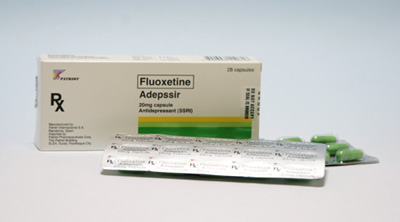
Fluoxetine

adepssir®


Antidepressants increase the risk of suicidal thinking and behavior (suicidality) in children and adolescents with major depressive disorder (MDD) and other "psychiatric disorders" and those considering use of these agents "must balance risk with the clinical need"


FORMULATION:
Each capsule contains:..........Fluoxetine (as hydrochloride) equivalent to 20mg Flouxetine

PHARMACOKINETICS:
Flouxetine is rapidly absorbed from the gastrointestinal tract with peak plasma-concentrations appearing 6 to 8 hours after administration. The systematic bioavailability does not appear to be affected by food. It is extensively metabolized, by dementhylation, in the liver to its primary active metabolite nor fluoxetine. Excretion is mainly via the urine. Protein binding is reported to be about 95%. Fluoxetine is widely distributed throughout the body. Fluoxetine has a relatively long elimination half-life of about 1 to 3 days; that of its metabolite, norfluoxetine, is even longer, being 4 to16 days. These long half-lives have clinical implications. Steady plasma concentrations will only be attained after several weeks. Additionally, after discontinuation fluoxetine and its metabolite may persist for a considerable time and this has led to precautions concerning the subsequent administration of other serotonergic antidepressants. Fluoxetine and norfluoxetine are distributed into breast milk.

INDICATIONS:
Treatment of depression and associated anxiety; treatment of symptoms of obsessive-compulsive disorder, bulimia nervosa and premenstrual dysphonic disorder.

DOSAGE AND ADMINISTRATIONS:
In the treatment of depression, the usual dose of fluoxetine is 20mg daily, taken in the morning. It is recommended that if no clinical response is seen after several weeks, the daily dose may be increased gradually, up to a maximum of 80mg per day. Doses above 20mg may be given in 2 divided doses, for example, one in the morning and one at noon. In the management of bulimia nervosa, the recommended dose of fluoxetine is 60mg daily. In the management of obsessive-compulsive disorder, the initial dose given is 20mg daily and may be increased to 60mg if there is no clinical response after several weeks. The maximum daily dose is 80mg administered twice daily or as once-daily regimen. In the treatment of premenstrual dysphoric disorder, a dose of 20mg daily may be given. Treatment may be continued up to 6 months, after which a benefit must be assessed before continuing with the treatment.

FOR THE ELDERLY:
It is recommended than a lower or less frequent dosage is given.

It should be noted that a prolonged half-life of fluoxetine will result in the need for several weeks of therapy to be employed before steady-state concentrations are attained; similarly after dosage adjustments, a time lag will occur before steady-state concentrations are again achieved.

Withdrawal symptoms have been reported for Selective Serotonin Reuptake Inhibitors (SSRIs). Retrospective analysis has also found that withdrawal symptoms may be associated more frequently in patients treated with shorter half-life SSRIs. Withdrawal symptoms include dizziness, sweating, nausea, vomiting, insomnia, tremor, headache, confusion and paraesthesia. Though, this withdrawal symptoms of SSRIs are not considered to be consequence of dependence.

It is therefore recommended that Fluoxetine should be gradually withdrawn to reduce the risk of withdrawal symptoms.

OVERDOSAGE:
SSRIs are generally regarded as less toxic that tricyclics or MAO inhibitors. A review of SSRI overdose indicates that there have been remarkably few fatal overdose with SSRI when taken alone. Moderate overdoses (up to 30 times the daily dose) were generally associated with minor symptoms at most; only at very high doses (more than 75 times the usual dose) were more serious side-effects noted, such as seizures, ECG abnormalities, and decreased consciousness. Toxicity, however, were generally increased in combination with alcohol and other drugs.

Reports indicate the main symptoms of over dosage of Fluoxetine were: tachycardia, restlessness, agitation, hypomania, tremor, nausea, and vomiting. These were considered relatively minor, and with short duration.

Treatment of overdosage:
Treatment of over dosage with fluoxetine involves the appropriate symptomatic and supportive therapy. Activated charcoal may be given by mouth if the amount ingested was large and treatment is within an hour of ingestion. Some consider that gastric lavage may be appropriate if the overdose is likely to be life threatening. Dialysis, haemoperfusion, exchange transfusion, and measure to increase urine production are considered unlikely to be of benefit.

PRECAUTIONS
Fluoxetine, as in other SSRIs that undergo hepatic metabolism and renal excretion, should be used with caution and reduced dosage in patients with hepatic impairment and renal insufficiency. Use in patients with severe renal or hepatic failure should generally be avoided.

Fluoxetine, as in other SSRIs, should be used with caution in patients with epilepsy or with history of such disorders. Care is also recommended when given to patients receiving concomitant ECT.

Fluoxetine may alter glyceamic control and therefore should be used with caution in diabetic patients.

Fluoxetine should be discontinued in patients who develop rashes, since systemic effects, including vasculities, have occurred in such patients.

Patients should be closely monitored during early therapy until improvement in symptoms has been observed because suicide is an inherent risk in depression.

If given for the depressive component of bipolar disorder, mania may be precipitated.

Anxiety and Insomnia has been reported in susceptible patients treated with Fluoxetine. Significant weight loss may be an undesirable event in treatment with Fluoxetine.

Fluoxetine, as in other SSRIs, may impair the performance of skilled tasks and if affected, patient should not drive or operate machinery.

While animal models performed on rats and rabbits may indicate no teratogenic effect, there are no sufficient and well-controlled trials in humans that would clearly show the safety during pregnancy. Fluoxetine should only be used only if evidently necessary in pregnant women.

Significant amounts of Fluoxetine is distributed to the breastmilk and adverse events have been reported in breast-fed infants; consequently fluoxetine is not recommended for nursing mothers.

WARNINGS:
Although different antidepressants have been used in combination under expert supervision in refractory cases depression, severe adverse reactions, including serotonin syndrome may occur. These adverse events may also occur when Fluoxetine is given with drugs known to act on the same neurotransmitter, a consequence of synergistic interaction. Sequential prescribing of different classes of antidepressants may also produce adverse side effects. Therefore an appropriate drug-free interval should elapse between discontinuation of one class of anti-depressant and the start of a new one.

Fluoxetine as with other antidepressants should not be used in combination with Monoamineoxidase inhibitors (MAO inhibitors). Based on data of combined administration of MAO inhibitors and tricyclics, 2 weeks must elapse between discontinuation of MAO inhibitor and start of treatment with fluoxetine. However, due to the long half-life of fluoxetine, there should be at least a five-week drug free interval between discontinuation of fluoxetine and initiation of treatment of a MAO inhibitor. An earlier administration may increase the risks of serious adverse events. Cases resulting to death following initiation of MAO inhibitor after treatment with fluoxetine have been reported though the casual relationship has not been clearly established.

The long elimination half-life of Fluoxetine can affect both the titration approach to determine the final dose and management of withdrawal from the drug.

INTERACTIONS:
Fluoxetine, as with other SSRIs, interact with a range of other drugs mainly due to its inhibitory activity on the hepatic cytochrome P450 isoenzymes.

Tryptophan: combination with tryptophan may result in adverse reactions, including agitation, restlessness, and gastrointestinal distress.

MAOIs and other anti-depressants: (see warnings)
Lithium: There have been reports in increase and decrease of lithium levels when used concomitantly with Fluoxetine. Cases of toxicity have been reported. Monitoring of Lithium levels should be regularly conducted.

Selegiline is an irreversible inhibitor of monoamine oxidase type B. It should not be given in combination with Fluoxetine. Follow the recommendations for shifting to MAOIs from treatment with Fluoxetine.

Benzodiazepines: Fluoxetine increase the plasma concentrations of some benzodiazepines. Fluoxetine is tightly bound to plasma proteins. Concomitant use with another drug also tightly bound to proteins may produce a shift in plasma concentration and may then potentially cause side effects. Displacement of Fluoxetine by other tightly-bound drugs may also likewise produce adverse events.

Thioridazine - Studies suggests that drugs which inhibit CYP2D6, such as certain SSRIs, including fluoxetine, will produce elevated plasma levels of thioridazine. Thioridazine administration produces a dose-related prolongation of the QTc interval, which is associated with serious ventricular arrhythmias, such as torsades de pointes-type arrhythmias, and sudden death. This risk is expected to increase with fluoxetine-induced inhibition of thioridazine metabolism.

Anticonvulsants - Patients on stable doses of phenytoin and carbamazepine have developed elevated plasma anticonvulsant toxity following initiation of concomitant fluoxetine treatment.

Antipsychotics - Clinical studies indicate a potential interaction between SSRIs and antipsychotics. Elevation of blood levels of haloperidol and clozapine has been observed in patients receiving concomitant fluoxetine.

ADVERSE EVENTS:
SSRIs such as Fluoxetine are less sedative that tricyclics and have fewer muscarinic and cardiotoxic effects. Common adverse events reported with Fluoxetine include: dry mouth, gastrointestinal disturbances (such as nausea, vomiting, dyspepsia, constipation, and diarrhea), anorexia and weight loss, and neurological side effects (anxiety, restlessness, nervousness, insomnia, drowsiness, fatigue, headache, tremor, dizziness, convulsion, hallucinations, extrapyramidal effects, sexual dysfunction, and symptoms suggestive of serotonin syndrome).
Excessive sweating, pruritus, skin rashes, and urticaria have also been reported. Angioedema and anaphylactic shock have also occurred.
Hyponatremia have also been associated with use of Fluoxetine, as in other anti-depressants), particularly in the elderly.
Hyperprolactinaemia, galactorrhea, anthralgia and myalgia have also been reported.

General - Frequent: chest pain, chills; Infrequent: chills and fever, face edema, intentional overdose, malaise, pelvic pain, suicide attempt; Rare: abdominal syndrome acute, hypothermia, intentional injury, neuroleptic malignant syndrome, photosensitivity reaction.

Cardiovascular System - Frequent: hemorrhage, hypertension, palpitation; Infrequent: angina pectoris, arrhythmia, congestive heart failure, hypotension, migraine, myocardial infarct, postural hypotension, syncope, tachycardia, vascular headache; Rare: atrial fibrillation, bradycardia, cerebral embolism, cerebral ischemia, cerebrovascular accident, extrasystoles, heart arrest, heart block, pallor, peripheral vascular disorder, phlebitis, shock, thrombophlebitis, thrombosis, vasospasm,ventricular arrhythmia, ventricular arrhythmia, ventricular extrasystoles, ventricular fibrillation.

Digestive System - Frequent: increased appetite, nausea and vomiting; Infrequent: aphthous stomatitis, cholelithiasis, colitis, dysphagia, eructation, esophagitis, gastritis, gastroenteritis, glossitis, gum hemorrhage, hyperchlorhydria, increased salivation, liver function tests abnormal, melena, mouth ulceration, nausea/vomiting/diarrhea, stomach ulcer, stomatitis, thirst:

Rare: biliary pain, bloody diarrhea, cholecystitis, duodenal ulcer, enteritis, esophageal ulcer, fecal incontinence, gastrointestinal hemorrhage, hematemesis, hemorrhage of colon, hepatitis, intestinal obstruction, liver fatty deposit, pancreatitis, peptic ulcer, rectal hemorrhage, salivary gland enlargement, stomach ulcer hemorrhage, tongue edema.

Endocrine System - Infrequent: hypothyroidism; Rare: diabetic acidosis, diabetes mellitus.

Hemic and Lymphatic System - Infrequent: anemia, ecchymosis; Rare: blood dyscrasia, hypochromic anemia, leucopenia, lymphedema, lymphocytosis, petechia, purpura, thrombocythemia, thrombocytopenia.

Metabolic and Nutritional - Frequent: weight gain; Infrequent: dehydration, generalized edema, gout, hypercholesteremia. Hyperlipemia, hypokalemia, peripheral edema; Rare: alcohol intolerance, alkaline phosphatase increased, BUN increased, creatine phosphokinase increase, hyperkalemia, hyperuricemia, hypocalcemia, iron deficiency anemia, SGPT increased.

Musculoskeletal System - Infrequent: arthritis, bone pain, bursitis, leg cramps, tenosynovitis; Rare: arthrosis, chondrodystrophy, myasthenia, myopathy, myositis, osteomvelitis, osteoporosis, rheumatoid arthritis.

Nervous System - Frequent: agitation, amnesia, confusion, emotional; liability, sleep disorder; Infrequent: abnormal gait, acute brain syndrome, akathisia, apathy, ataxia, buccoglossal syndrome, CNS depression, CNS stimulation, depersonalization, euphoria, hallucinations, hostility, hyperkinesias, hypertonia, hypesthesia, incoordination, libido increased, myoclonus, neuralgia, neuropathy, neurosis, paranoid reaction, personality disorder, psychosis, vertigo;

Rare: abnormal electroencephalogram, antisocial reaction, circumoral paresthesia, coma delusions, dysarthria, dystonia, extrapyramidal syndrome, foot drop, hyperesthesia, neuritis, paralysis, reflexes decreased, reflexes increased, stupor.

Respiratory System - Infrequent: asthma, epistaxis, hiccup, hyperventilation; Rare: apnea, atelectasis, cough decreased, emphysema, hemoptysis, hypoventilation, hypoxia, larynxedema, lung edema, pneomothorax, stridor.

Skin and Appendages - Infrequent: acne, alopecia, contact dermatitis, eczema, maculopapular rash, skin discoloration, skin ulcer, vesiculobullous rash; Rare: furunculosis, herpes zoster, hirsutism, petechial rash, psoriasis, purpuric rash, pustular rash seborrhea.

Others - Frequent: ear pain, taste pervesion, tinnitus; Infrequent: conjunctivitis, dry eyes, mydriasis, photophobia;

Rare: blepharitis, deafness, diplopia, exophthalmos, eye hemorrhage, glaucoma , hyperacusis, iritis, parosmia, scleritis, strabismus, taste loss, visual field defect.

Urogenital System - Frequent: urinary frequency; Infrequent: abortion, albuminuria, amenorrhea, anorgasmia, breast enlargement, breast pain, cystitis, dysuria, female lactation, fibrocystic breast, hematuria, leucorrhea, menorrhagia, metrorrhagia, nocturia, polyuria, urinary incontinence, urinary retention, urinary urgency, vaginal hemorrhage;

Rare: breast engorgement, glycosuria, hypomenorrhea, kidney pain, oliguria, priapism, uterine hemorrhage, uterine fibroids enlarged.

CAUTION:
Foods, Drugs, Devices and Cosmetics Act prohibits dispensing without prescription.

AVAILABILITY:
Boxes of 14 blister-packed capsules
Boxes of 28 blister-packed capsules by 14's

STORE AT TEMPERATURES NOT EXCEEDING 30°C
The Company

Corporate Services

Careers at Natrapharm
Home | The Company | Corporate Values | Corporate Services | Products | About the Philippines | Careers | Contact Us | Sitemap

©2008 . Powered by ASPAC/LAW